

In Encotech Eng'g Consultants, Inc. v. Miramon, No. 15-25-00173-CV, 2026 Tex. App. LEXIS 9117, the Court of Appeals of Texas, Fifteenth District (Court of Appeals) the plaintiff filed suit against several engineering firms, including Encotech Engineering Consultants, Inc. (Encotech). Encotech filed a motion to dismiss. The Court of Appeals considered whether a certificate of merit filed against Encotech was deficient because it made collective assertions of negligence against all defendants. The Court of Appeals reversed the trial court’s denial of Encotech’s motion ... Continue Reading
Product defect cases can be some of the most challenging losses for subrogation practitioners to prosecute. There are logistical concerns such as whether enough of the subject product survived the loss to reach a theory of liability. There are practical concerns such as identifying a viable manufacturer or distributor to pursue. Then of course, there are legal concerns. Proving the legal elements necessary to support a product defect case in court is complex, and it only becomes more so when states like Arizona add layers to the equation.
In Maywald v. Toyota Motor Corp. LLC, No ... Continue Reading

In Universal Property & Casualty Ins. Co. v. Amazon.com Services, LLC, No. 24-6195, 2026 U.S. Dist. LEXIS 130880 (Universal Property), Amazon.com Services, LLC (Amazon) argued that the jury should reduce the plaintiff’s recovery against Amazon by apportioning fault to non-party entities upstream from Amazon in the chain of distribution. The United States District Court for the Southern District of Florida (District Court) rejected Amazon’s argument.
In Universal Property, the property insurer brought a products liability action against Amazon after an electric ... Continue Reading

In Haire-Cochran v. 24 Restore, Inc., No. A25-1206, 2026 Minn. App. LEXIS 153, the Court of Appeals of Minnesota (Court of Appeals) addressed whether construction work performed after a fire loss to a property constituted an “improvement to real property” under Minnesota Statute of Limitations, section 541.051, subdivision 1(a). The statute sets forth a reduced two-year limitations period for claims arising out of “the defective and unsafe condition of an improvement to real property.” The lower court dismissed the plaintiff’s case on grounds of the two-year statute ... Continue Reading
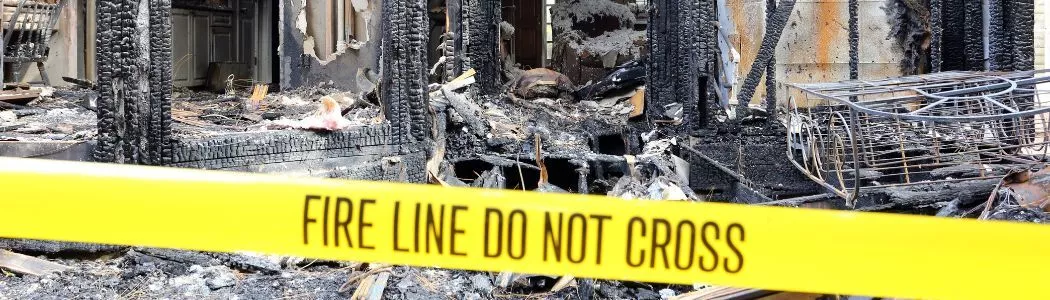
A recent decision from the United States District Court for the Eastern District of Pennsylvania reinforced a fundamental requirement in product liability cases that can sometimes be overlooked: proving the product was actually defective. In Motto v. Newell Brands, Inc., No. 24-1338, 2026 U.S. Dist. LEXIS 23804 (E.D. Pa. 2026), the plaintiff homeowners alleged that a defective candle in a glass jar caused a fire that damaged their home. They brought claims for strict product liability, negligence and breach of the implied warranty of merchantability against the manufacturer and ... Continue Reading

In Clearfield County v. Transystems Corp., No. 10 WAP 2025, 2026 Pa. LEXIS 774, Clearfield County (the County) filed suit against Transystems Corporation (Transystems Corp.) based on architectural and engineering plans for a jail completed in 1977. Transystems Corp. filed an Answer that asserted a defense that the trial court lacked jurisdiction because, pursuant to 42 Pa.C.S. § 5536, the County did not file its complaint within 12 years of completion of the jail. The County filed preliminary objections contending that, among other things, the doctrine of nullum tempus occurrit ... Continue Reading
In Duffy v. Tatum, 2026 Pa. Super. LEXIS 112, 2026 PA Super 41, the Superior Court of Pennsylvania (Superior Court) considered whether an arbitration provision contained in the online Terms of Service on the defendant’s website were enforceable. The plaintiff, Daniel Duffy (Duffy), visited the website of defendant, Dolly, Inc. (Dolly), to purchase moving services. Duffy selected the number of movers, items to be moved and the type of vehicle needed. To complete the booking, the website required Duffy to checkmark a box labeled “By checking this box I accept the Dolly Terms of ... Continue Reading
The economic loss doctrine (ELD) has been a thorn in the side of subrogation practitioners for some time. Particularly in states that enforce it strictly, an adverse ruling based on the doctrine can sometimes be an unexpected pull of the rug from under what would otherwise be a strong subrogation case. Because of the harsh consequences that such a ruling can have, it is crucial to be aware of how the state you are handling a case in deals with the ELD and what the effects are on potential recoverability.
In Sierra Summit, LLC vs. Humphreys & Partners Architects, Nev., LLC, No ... Continue Reading
On April 7, 2026, the Governor of Kansas signed a new law, 2025 Kan. SB 36, that amends and repeals K.S.A. 60-465. K.S.A. 60-465 addresses the rules of evidence related to the admissibility of testimony from lay and expert witnesses. As amended, lay witness opinions must be helpful to clearly understanding the testimony of the witness or determining a fact in issue. The former statute required a lay witness to provide an opinion helpful to a “clearer” understanding of the testimony of the witness.
With respect to experts, a witness who qualifies as an expert based on knowledge ... Continue Reading
In City of N. Tonawando v. Penn Power Group, LLC, 77 CA 24-01685, 2026 N.Y. App. Div. LEXIS 1800 (4th Dept. Mar. 20, 2026), the Supreme Court of New York, Appellate Division, Fourth Department (Appellate Court), considered whether the defendant’s motion to dismiss should be granted on the grounds that the breach of warranty was time-barred by the statute of limitations and the plaintiff’s negligence claims were barred by the economic loss doctrine (ELD). The Appellate Court agreed with the defendant that the breach of warranty claim was barred by the statute of limitations and ... Continue Reading

Recent Posts
Categories
- Subrogation
- Texas
- Products Liability
- Certificate of Merit
- Experts
- Statute of Limitations-Repose
- CPSC Recalls
- Contracts
- Construction Defects
- Experts – Daubert
- Florida
- Litigation
- New York
- Economic Loss Rule
- Pennsylvania
- Arizona
- Arbitration
- Evidence
- Negligence
- Experts - Reliability
- Minnesota
- Damages
- New Jersey
- AIA Contracts
- Indiana
- Comparative Fault
- Illinois
- Internet Terms
- Right to Jury Trial
- Nevada
- Kansas
- Legislation
- Anti-Subrogation Rule
- Landlord-Tenant
- Limitation of Liability
- Sutton Doctrine
- Warranty - UCC
- Waiver of Subrogation
- Uncategorized
- Massachusetts
- California
- Idaho
- Damages-Personal Property
- Louisiana
- Jurisdiction
- Maryland
- Colorado
- Virginia
- South Carolina
- Cargo - Transportation
- Indemnification
- Malpractice
- Causation
- Spoliation
- Tennessee
- Condemnation
- CPSC Warning
- Michigan
- Comparative-Contributory Negligence
- Contribution-Apportionment
- Rhode Island
- Product Liability
- Assignment
- Missouri
- Parties
- Public Policy
- Civil Procedure
- Res Judicata
- Damages – Personal Property
- West Virginia
- Wyoming
- Oklahoma
- Builder's Risk
- Contractual Subrogation
- Equitable Subrogation
- Georgia
- Insurable Interest
- Mississippi
- Made Whole
- Delaware
- Settlement
- Subrogation – Equitable
- Construction
- Premises Liability
- Joint or Several Liability
- Montana
- Duty
- New Mexico
- Privity
- Right to Repair Act
- Building Code
- Landlord
- Tenant
Tags
- Subrogation
- Texas
- Experts
- Products Liability
- Certificate of Merit
- Contracts
- Construction Contracts
- Construction Defects
- Statute of Limitations
- Pennsylvania
- Amazon-eBay
- Florida
- Statute of Repose
- Economic Loss Doctrine
- Arizona
- Waiver of Subrogation
- Product Liability
- New York
- Experts – Daubert
- Improvement
- Comparative Fault
- Arbitration
- Litigation
- Evidence
- New Jersey
- Architects-Engineers
- Negligence
- Indiana
- Illinois
- Betterment
- Minnesota
- Damages
- Louisiana
- Experts - Reliability
- Landlord-Tenant
- Chain of Distribution
- Daubert
- Failure to Warn
- CPSC Recalls; Products Liability
- Spoliation
- Limitation of Liability
- AIA Contract
- Idaho
- Loss of Use
- Vehicles
- Contracts - Enforcement
- Statute of Limitations – Discovery Rule
- Nullem Tempus
- Massachusetts
- Circumstantial Evidence
- Nevada
- Kansas
- Georgia
- Maryland
- Oklahoma
- Civil Procedure
- Indemnification
- Malfunction Theory
- Sutton Doctrine
- California
- Damages-Vehicles
- Jurisdiction
- Jurisdiction - Personal
- Public Policy
- Mediation
- Anti-Subrogation Rule
- Cyber Subrogation
- Tennessee
- Delaware
- Colorado
- Incorporation by Reference
- Negligence – Duty
- Virginia
- West Virginia
- Negligent Undertaking
- Apportionment
- Economic Loss Rule
- Statute of Limitations - Contractual
- Privity
- Statute of Limitations - Tolling
- Connecticut
- Gist of the Action
- Design Defect
- Malpractice
- Causation
- Made Whole
- Condemnation
- Inverse Condemnation
- Statute of Limitations - Accrual
- Settlement
- Experts – Qualifications
- Michigan
- Rhode Island
- Water Damage
- Condominiums
- Contracts - Formation
- Non-Party at Fault
- Expert Qualifications
- Amazon
- Evidence - Hearsay
- Wisconsin
- workers' compensation subrogation
- Warranty - Implied
- Malfunction Theory; Design Defect
- Independent Duty
- Ohio
- Unconscionable
- Missouri
- Parties
- Manufacturing Defect
- Pleading
- Removal
- Entire Controversy Doctrine
- Motion to Intervene
- Res Judicata
- Subrogation; High-Net-Worth; Damages; Art; Cargo-Transportation; Anti-Subrogation Rule
- Lithium-ion battery
- Products Liability – Risk-Utility
- Anti-Subrogation Rule; Wyoming; Landlord-Tenant; Sutton Doctrine
- Internet Sales
- Sanctions
- Spoliation – Fire Scene
- Builder’s Risk
- Contractual Subrogation
- Equitable Subrogation
- Exculpatory Clause
- Gross Negligence
- Insurable Interest
- Mississippi
- Standing
- Third Party
- Accepted Work
- Montana
- Independent Contractor
- New Mexico
- Res Ipsa
- Right to Repair Act
- Damages-Code Upgrades
- Statute of Limitations - Repose
- Washington
- Implied Warranty of Habitability
- Warranty - Construction
- Forum-Venue
- Joint-Tortfeasors
- Warranty – Express
- AIA Contracts
- Anti-Indemnity Statutes
- Products Liability - Foreseeability
- Cargo-Transportation
- Contribution
- MCS-90
- Substantial Completion
Authors
Archives
- October 2026
- August 2026
- July 2026
- June 2026
- May 2026
- April 2026
- March 2026
- January 2026
- December 2025
- November 2025
- September 2025
- August 2025
- July 2025
- May 2025
- April 2025
- March 2025
- February 2025
- January 2025
- December 2024
- November 2024
- October 2024
- September 2024
- August 2024
- July 2024
- June 2024
- May 2024
- April 2024
- March 2024
- February 2024
- January 2024
- December 2023
- November 2023
- October 2023
- September 2023
- August 2023
- July 2023
- June 2023
- May 2023
- April 2023
- March 2023
- February 2023
- January 2023
- December 2022
- November 2022
- October 2022
- September 2022
- August 2022
- July 2022
- June 2022
- May 2022
- April 2022
- March 2022
- February 2022
- January 2022